


Strategy
7 min read
CSR pressure on B2B companies is no longer just a trend; it is a contractual reality. Tenders now include environmental criteria, procurement departments evaluate supplier practices, and communications teams measure booth environmental footprints as a key indicator of brand consistency. Does designing an eco-friendly booth necessarily mean compromising on aesthetics or visual impact? Not if you approach it as a creative constraint that enhances the project rather than a limitation that diminishes it.



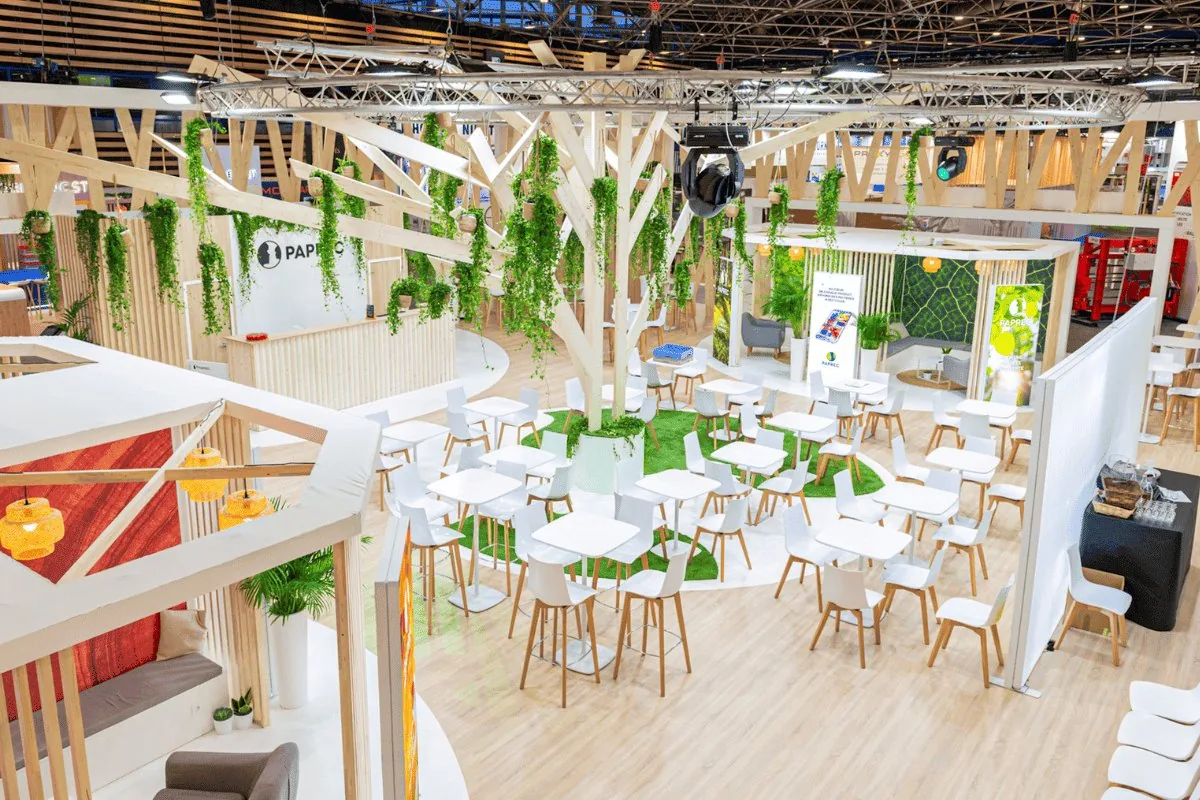
Impact hierarchy: the lifespan of the project is the most significant lever, far more so than the choice of materials. A booth designed to last 5 years and be reused 15 times has an impact per use that is 15 times lower than a booth discarded after a single trade show, even if it was made from recycled materials.
Eco-design is a structural approach that integrates environmental criteria from the initial brief and design phase. It is measurable through carbon footprints, material certifications, and recyclability rates. Greenwashing is simply communicating about unverifiable practices.
In 2026, B2B decision-makers know the difference. A booth that claims to be eco-friendly without being able to provide material documentation or sustainability data risks a reputational backlash.
Contrary to popular belief, an eco-designed booth is not necessarily plain or minimalist. Natural materials (solid wood, stone, raw metal, plants, wool, vegan leather, etc.) offer a premium aesthetic that is often more distinctive and memorable than plastic finishes or synthetic composites.
Sectors such as natural cosmetics, premium food and beverage, sustainable construction, and responsible financial services have understood that eco-design is a signal of brand consistency perceived positively by the most demanding decision-makers.
In B2B sectors where trade show ESG criteria are integrated into procurement processes (industry, business services, public sector), a well-documented eco-designed booth can directly influence visitors' business decisions. It is a concrete differentiator, not just a marketing message.
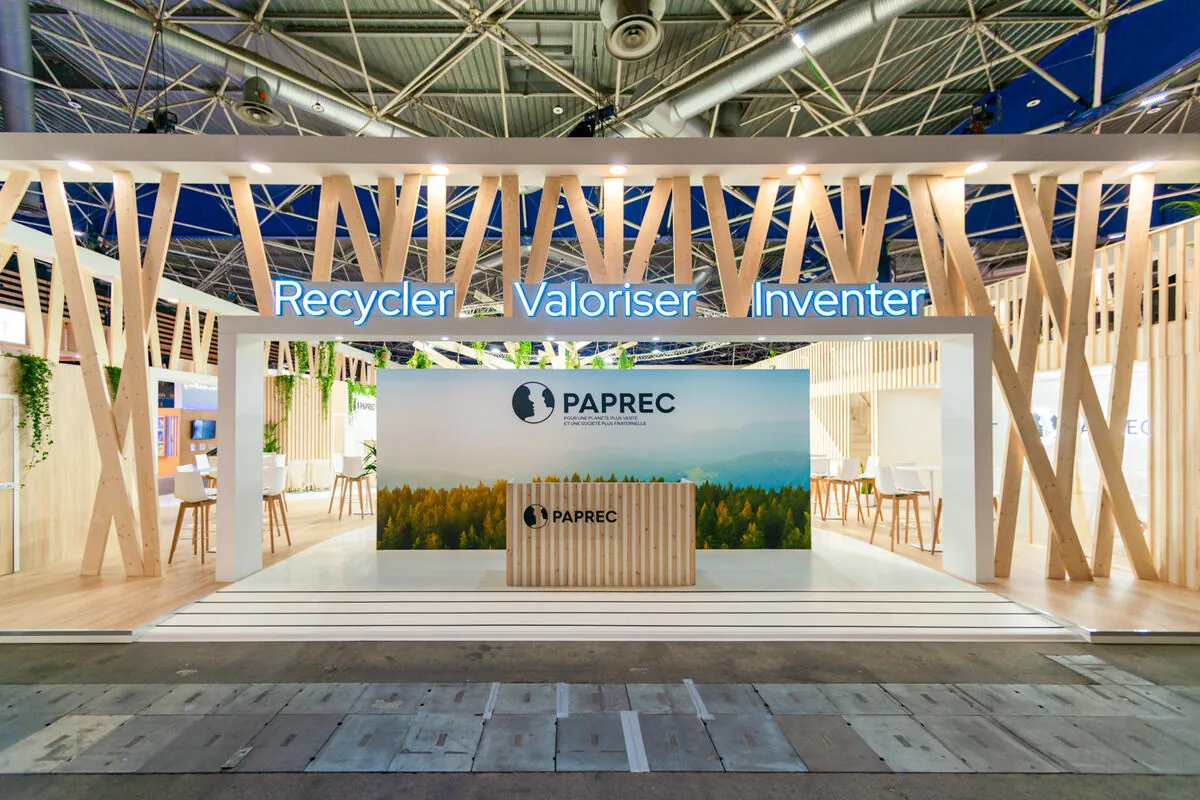
The CSR approach of a trade show is only valuable if it is measured and documented. Ask your design agency to provide you with:
Recommended communication: include a QR code on your stand that links to a page dedicated to your event CSR strategy. This subtle yet documented signal is far more credible than any verbal claims about your environmental commitments.
Eco-design must be included in your stand specifications as an explicit requirement—not just a wish. Specify:
Read also: 3 mistakes in your trade show booth brief
A well-designed eco-friendly booth offers two simultaneous benefits: it reduces the environmental footprint of your trade show presence and strengthens the consistency between your brand messaging and your actual practices. A third, purely economic benefit is often added: a booth designed to last costs less per use over a 3 to 5-year period.
The real question isn't "can we afford an eco-designed booth?", but "can we afford not to?" in a context where CSR consistency is becoming an evaluation criterion in B2B business relationships. Planning a trade show? Let's talk about your booth project !
Are you still here? Good news. We’ve got more to share with you. Short, to-the-point articles, written for those who are preparing for a trade fair and setting up their stand but don’t have time to read novels.





@2026 AUKARÉ all rights reserved.