

Strategy
7 min read
Exhibitors preparing for Global Industrie aren't just looking to show up. They are looking to win over decision-makers, sign subcontracting contracts, and demonstrate technology to engineers who will be making investment decisions. With 2,500 exhibitors, 45,000 visitors, and 80 countries represented, here is how to structure your participation, month by month.



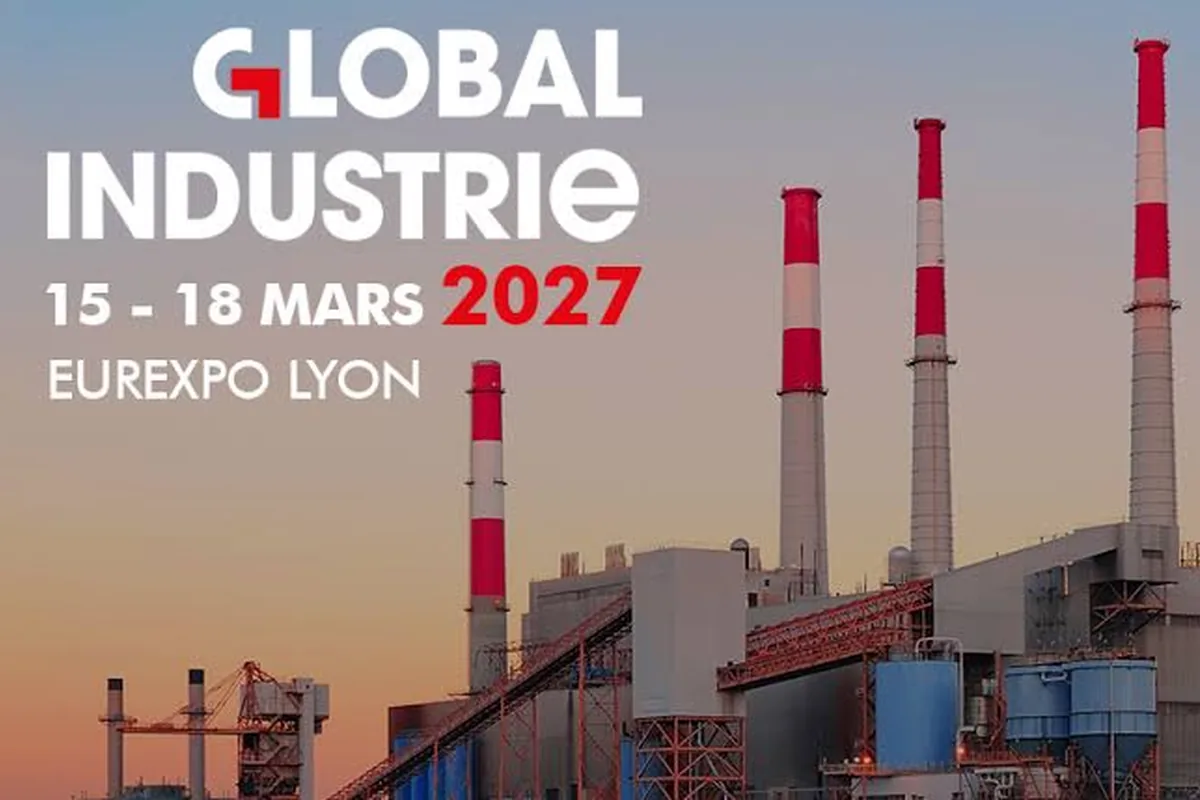
Exhibitors preparing for Global Industrie aren't just looking to "show up." They are looking to win over decision-makers, sign subcontracting contracts, and demonstrate technology to engineers who will be making investment decisions in the weeks that follow. Preparing for your participation in Global Industrie requires a methodical approach, not intuition. Global Industrie 2027 will be held from March 15 to 18, 2027 at Eurexpo Lyon. Here is how to structure your preparation, month by month, with the figures and technical details that truly make a difference at France's largest industrial event.
Global Industrie was born from the merger of five historic events: INDUSTRIE, MIDEST, SMART INDUSTRIES, TOLEXPO, and MEASUREMENT WORLD. Today, it is the only trade show in France that covers the entire industrial value chain, from subcontracting and measurement technologies to automation, additive manufacturing, and the industry of the future. The 2026 edition at Paris Nord Villepinte brought together 2,500 exhibitors and 45,000 professional visitors from 80 countries, featuring 15 thematic zones and a program with over 800 speakers. The show alternates annually between Paris (Paris Nord Villepinte) and Lyon (Eurexpo Lyon), giving it a strategic dual geographic footprint across the French industrial landscape.
This is not a general public awareness event. The 45,000 visitors at Global Industrie are industrial directors, production engineers, purchasing managers, decision-makers, and cluster representatives. It is also a recruitment hub: each edition welcomes approximately 8,000 students and job seekers, making it an HR sourcing tool that executive management teams are increasingly integrating into their participation strategy. An exhibitor who arrives at Global Industrie with a poorly designed booth and an unprepared team facing this type of audience misses an opportunity that only comes around once a year.
Global Industrie is held in March, just before second-quarter investment budgets are finalized. For many industrial directors, the sourcing and equipment decisions made at the show or in the weeks that follow involve significant budgets. Missing the event means falling off your prospects' radar for twelve months.
Everything starts with a specific question: why are you participating in Global Industrie? Whether it's landing new subcontracting contracts via MIDEST, demonstrating a technological innovation and applying for the Global Industrie Awards, meeting decision-makers from a specific sector (aerospace, automotive, energy), or expanding your export presence, each objective concretely changes the booth requirements. A subcontracting goal points toward MIDEST and a location in aisles frequented by industrial buyers. A technological demonstration goal points toward a booth with a functional machine space and signage capable of catching the eye in a dense environment.
It is also time to book your space. Global Industrie is spread across 15 thematic zones located in several halls. Choosing the right hall and your specific position within it is just as important as the square footage: a corner spot at a busy intersection attracts a very different type of traffic than a spot at the end of an aisle, and being near key industry players helps establish your credibility with visitors.
At Global Industrie, the main technical constraint is often the presence of operating machinery on the stand. The 2025 Lyon edition featured over 1,500 machines in operation, which sends a clear signal about what visitors expect. If you are exhibiting equipment in action, your design brief must address specific questions: what is the floor load capacity for your machine (hall floors have weight limits per square meter that vary by location), what power supply is required (installed power, three-phase or single-phase, dedicated panel), what safety clearance is needed around moving parts (the organizer mandates safety perimeters for operating equipment), and what signage will make your demonstration visible from a distance in a noisy, visually saturated environment.
For exhibitors without machinery, focusing instead on services or digital solutions, the challenge is different: in a trade show where your neighbors are showcasing robots and machining centers, intangible offerings are inherently less visible. Your stand must compensate for this by strongly highlighting concrete benefits and client references rather than just product promises. This is also the time to decide between custom-built stands and modular stands, depending on how often you attend this annual event.
Global Industrie attracts visitors from 80 countries. Pre-show communication should be in both French and English, with special attention paid to priority export markets. Eight to twelve weeks out, announce your participation on LinkedIn and via email, including your stand number as soon as it is available. Four to six weeks out, highlight the innovations or machines you will be presenting, especially if you are applying for the Global Industrie Awards. A meeting scheduler is particularly useful at this show, as industrial directors often plan their visits well in advance.
Team training should cover three specific points: a 30-second pitch that immediately positions your expertise within the industrial chain (avoid generic pitches), a qualification grid tailored to the profiles at this show (decision-makers, specifying engineers, buyers, competitors), and a clear policy on managing machine demonstrations. An unscheduled demonstration for an unqualified visitor ties up two staff members for twenty minutes with zero commercial return.
Global Industrie runs for 4 days. The first day often attracts the most senior profiles (directors, decision-makers), and Wednesday evening—extended until 8:00 PM for the 2026 edition—is a strategic window for informal networking after the official day ends. Rotating your team every 3 to 4 hours prevents a drop in the quality of your welcome. If you have a machine on display, schedule specific demonstration times rather than performing them on demand; programmed demos create a focal point and add value to the equipment.
Stands range from €3,600 for a small standard space to over €80,000 for large configurations featuring machinery. Beyond the floor space, organizer fees take on a specific dimension: high-power three-phase electrical connections (billed based on installed power), heavy-vehicle access for machine delivery and removal, rigging and lifting for heavy equipment, and insurance for operating machinery (a machine in demonstration mode may fall outside the scope of your standard policy—check with your insurer before signing the stand contract). For full details: the price of a stand, what you are really paying per square meter.
Since Global Industrie is an annual event that alternates between Paris and Lyon, a modular stand designed to adapt to both sites is often the most cost-effective choice starting from your second year. Custom builds remain relevant for a strategic first-time appearance or a major product launch where visual exclusivity takes priority over amortization.
The Global Industrie audience is accustomed to technical discussions. Badge scanning is a baseline, but it doesn't capture the data that matters most: the current project and the committed budget. Supplementing every scan with an immediate contextual note via a mobile app—such as sector, machine or service sought, and decision timeline—turns a badge into a qualified lead. This is the logic behind turning a booth into a lead-generation machine, even in an environment where the technical team is often tied up with demonstrations.
The Global Industrie Awards competition recognizes the best industrial innovations presented by exhibitors. This distinction lives on well beyond the 4 days of the show: it remains a feature on your website, sales materials, and tender responses for years to come. For exhibitors with a genuine innovation, applying is a decision to be made during the preparation phase, not a last-minute idea.
In the industrial sector, decision cycles are long, but contacts cool down quickly after a busy trade show. Within 48 to 72 hours, send a follow-up email with the requested technical information (data sheets, indicative quotes, machine documentation), connect on LinkedIn, and schedule a meeting for "A" leads. For international contacts, follow up in English with translated technical materials.
At an industrial trade show where the sales cycle can last 12 to 24 months, reporting must cover a long window: qualified decision-makers met, tenders received within 6 months, and contracts signed over the following 18 months. For the complete method: how to calculate the ROI of a trade show.
Before you start planning for Global Industrie, ask yourself: does your booth communicate what you do and who you do it for in under five seconds? If the answer is no, that is likely where you should start. To learn more about exhibiting: global-industrie.com.
Global Industrie 2027 will be held from March 15 to 18, 2027 at Eurexpo Lyon over 4 days. The following edition will take place at Paris Nord Villepinte, as the trade show alternates between the two venues each year.
Ideally between 9 and 12 months before the event. The show alternates between Paris Nord Villepinte and Eurexpo Lyon. Spaces in the most popular sectors (MIDEST, SMART INDUSTRIES) sell out quickly.
Between €3,600 and over €80,000 depending on the format. For exhibitors with operating machinery, specific technical costs (three-phase connection, rigging, insurance for demonstration equipment) are often missing from the initial quote if the brief does not account for them.
Since the show is annual and alternates between Paris and Lyon, a modular stand adapted to both sites is often the most cost-effective choice starting from the second edition. Custom builds remain relevant for a major first-time participation or a product launch.
By planning ahead in the brief: floor load and weight capacity limits of the hall, power supply (power rating and current type), regulatory safety perimeter around the equipment, and logistics for delivery and removal. These elements must be validated with the organizer before finalizing the stand layout.
Strategic planning begins 9 to 12 months in advance. Stand design and technical procedures start 4 to 6 months before, incorporating the specific constraints of industrial equipment. Communication and team training intensify in the final two months.
Are you still here? Good news. We’ve got more to share with you. Short, to-the-point articles, written for those who are preparing for a trade fair and setting up their stand but don’t have time to read novels.





@2026 AUKARÉ all rights reserved.