


Strategy
7 min read
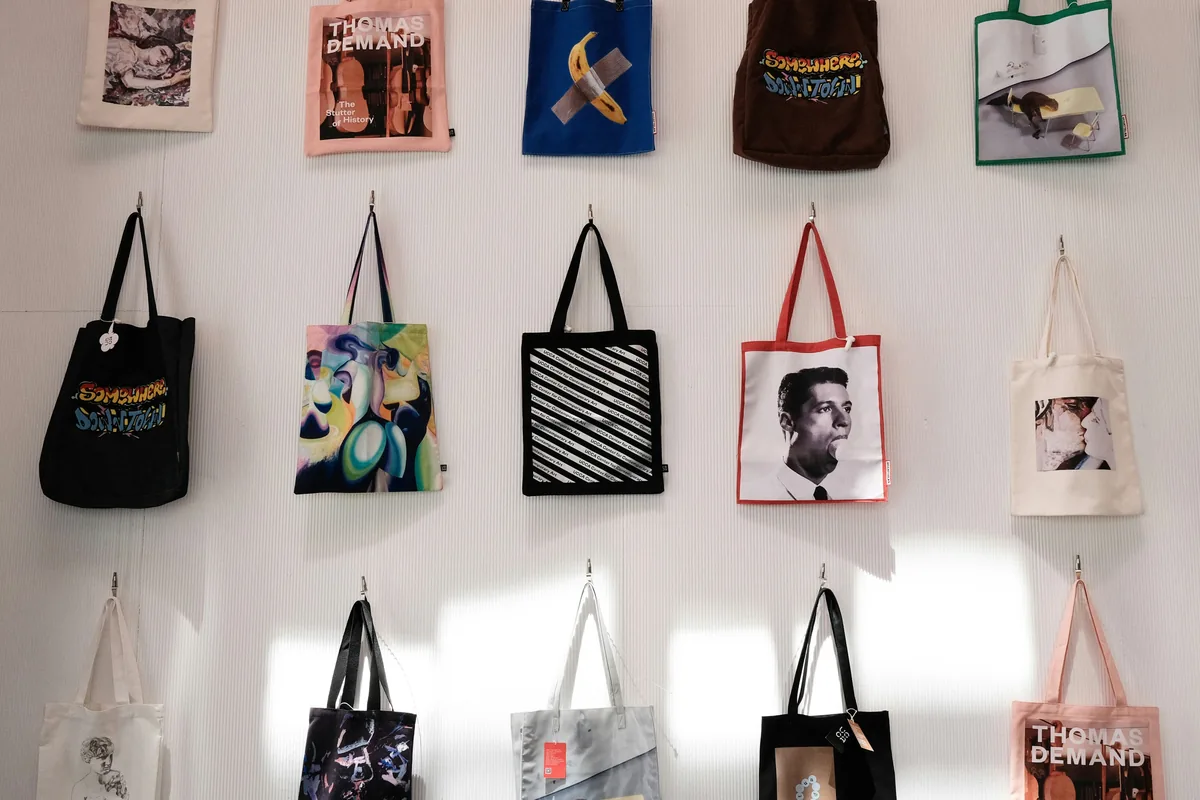
Personalized pens and tote bags with your logo: the B2B trade show classic. The problem is that this reflex is expensive, almost impossible to measure, and often ends up working against you. Here is a figure to keep in mind before your next order of 500 items: most promotional products are thrown away or forgotten in a drawer within 48 hours. The real question isn't "which item should I choose," but "does this budget generate any value at all?"



The classic argument: promotional items create memorability, and therefore loyalty. The prospect leaves with your pen and thinks of you when it's time to sign. The problem is that what anchors a memory isn't the object, but the interaction that comes with it.
Documented findings: an 8 to 10-minute conversation with a salesperson who knows their stuff creates 5 to 10 times more memory retention than a trade show client gift.
Try this test on a Monday afternoon at the end of a trade show aisle: the trash cans are overflowing with tote bags, brochures, and swag picked up throughout the day. Visitors sort through their haul as they walk, keeping only what is truly useful. The event marketing budget poured into generic items literally ends up in the dumpster.
Let's look at a concrete, rather conservative example:
With that same €1,000 invested in a targeted demo or high-value content, you generally generate 3 to 5 times more qualified leads. This isn't a matter of opinion; it's a calculation.
And the costs we often forget to count:
Low-quality items. A leaking pen, a loose seam, a dead USB drive: it’s never neutral. It associates your brand with mediocrity. In B2B, where every detail counts, a faulty item degrades the perceived booth value more than it helps it.
Irrelevant items. A strategic consulting firm handing out balloons, a cybersecurity player giving away stuffed animals: the disconnect between your positioning and your swag muddies the message instead of reinforcing it.
Disposable items. Mass-distributed single-use plastic: the risk is no longer limited to your image. Since the Climate and Resilience Law, advertisers are subject to a strict legal framework regarding their environmental claims, and the signal sent to the most influential decision-makers is rarely good. The same logic applies to your booth itself: an eco-designed setup documents your CSR consistency far better than any speech, and a piece of disposable swag can contradict everything your booth showcased in a matter of seconds.
Instead of an object, offer knowledge: a value-added piece of content downloadable via QR code (practical guide, industry report, checklist) is perceived as more useful, more consistent with an expert positioning, and generates trackable interaction. You know who scanned it, when, with which contact, and from which area of the booth, provided the tracking is set up correctly.
A tote bag creates an invisible lead. Content creates a measurable lead and boosts your credibility in the process. The choice is obvious. This is exactly the logic behind turning a booth into a lead-generation machine.
Freshly roasted coffee beans, a tasting of local products, a lounge area with wireless chargers: these micro-attentions create a positive memory, extend the time spent at the booth, and facilitate sales conversations. You don't need a big budget for this to work. Just consistency with your positioning and concrete utility for the booth's dynamic. It's also the kind of detail that really pays off if you intelligently reuse your booth across multiple trade shows throughout the year.
If you are committed to having a physical object in your swag strategy, there are three non-negotiable rules: consistency with your sector, visible quality, and selective distribution reserved for qualified leads, never handed out en masse to every visitor.
With a budget of €3,000, here is how to reinvest it for a better trade show ROI :
If this budget seems tight compared to the actual cost per square meter of your booth, it is a sign that your overall trade show budget needs a framework, not just an adjustment to your swag. And if you really want to know what this budget is bringing you, calculate your trade show ROI using the full method, not just the number of badges scanned.
The trade show swag strategy that works in 2026 doesn't ask "what item should we give away," but "what value can we offer." Redirecting even half of that budget toward content, visitor experiences, or product qualification tools almost always yields a better return. Before your next trade show, ask your team: if we had this budget to reinvest in our booth experience, what would we do differently? The answer will tell you exactly where to improve your booth activation strategy.
Are you still here? Good news. We’ve got more to share with you. Short, to-the-point articles, written for those who are preparing for a trade fair and setting up their stand but don’t have time to read novels.





@2026 AUKARÉ all rights reserved.